

A redevelopment project is a complex, multi-stage process that requires active collaboration, timely decision-making, and seamless coordination between the Housing Society and the Developer. Each party has distinct but complementary roles that contribute to the success of the project.
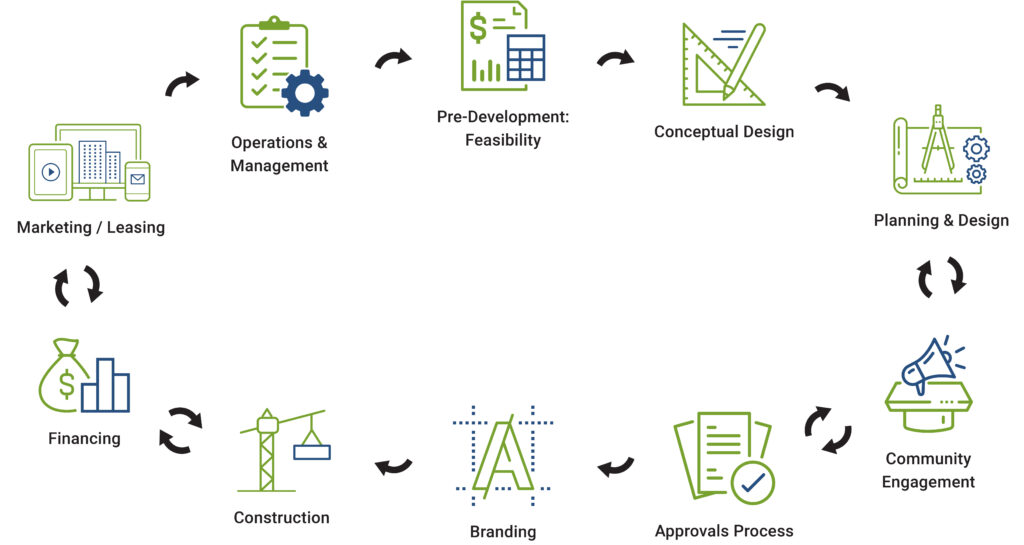
Role of the Society:
The Society, being the owner of the land and the representative of all its members, plays a central role in decision-making and supervision. It is primarily represented by its Managing Committee (MC), which works in close coordination with various professionals such as:
Project Management Consultant (PMC): Advises on technical aspects, feasibility, developer selection, and overall project execution.
Legal Advisor: Ensures all agreements, documents, and statutory processes are legally compliant and protect members’ interests.
Other Consultants: May include auditors, quantity surveyors, and financial experts, depending on the project scale and complexity.
Role of the Developer:
The Developer is responsible for the planning, execution, financing, and delivery of the new building. They deploy their internal teams and external consultants, including:
In-House Departments:
Technical Team (engineering, planning)
Legal and Finance Teams
Liaisoning Officers for dealing with BMC, MHADA, SRA, and other authorities
Marketing and Sales Teams for selling additional units
External Consultants:
Architects and Structural Engineers
MEP Consultants (Mechanical, Electrical, Plumbing)
Geotechnical Experts
Environmental Consultants
Construction Contractors and vendors
Key Success Factors:
Timely Decision-Making: Delays in approvals, consents, or meetings can cause project stagnation.
Transparent Communication: Both Society and Developer must maintain open, honest communication with all stakeholders.
Proper Documentation: Every decision, agreement, and report must be properly recorded and stored.
Trust and Accountability: Mutual trust and a professional approach are necessary to manage challenges effectively.
Compliance with Government Guidelines: Particularly the directions issued under Section 79(A) of the Maharashtra Co-operative Societies Act, 1960, which provide structured procedures for the Society to follow, especially in the initial phases like appointment of PMC, SGBMs, tendering, and developer selection.
Additional Considerations:
The Society should regularly update its members through meetings, newsletters, and circulars.
The Developer should provide timely progress reports, architectural plans, and construction timelines.
A tripartite agreement among Society, Developer, and PMC can enhance accountability and streamline communication.
