

Redevelopment is a process of giving new life to old, dilapidated, or unsafe buildings by demolishing them and constructing modern structures in their place. It is an important solution for urban housing societies, especially in metropolitan cities like Mumbai, where land is scarce and buildings constructed decades ago have become structurally weak. Redevelopment not only ensures safety but also enhances the living standards of residents by providing them with better amenities and infrastructure.
Need for Redevelopment
The need for redevelopment arises mainly because:
Aging Infrastructure – Most housing societies built before the 1980s are now over 40 years old and face serious wear and tear.
Safety Concerns – Old structures may not meet modern safety standards, posing risks of collapse or fire hazards.
Space Constraints – Families have grown, but the size of flats remains small compared to modern lifestyle needs.
Modern Amenities – Residents demand facilities like lifts, parking, fire safety, security systems, and recreation areas which older buildings lack.
Economic Value – Redevelopment increases the property value and provides financial benefits such as corpus fund, rent during transit period, and shifting allowance.
Process of Redevelopment
The redevelopment process generally follows these stages:
Society Resolution – A General Body Meeting (GBM) is held, and a majority of members approve the decision for redevelopment.
Feasibility Study – A technical and financial study is done to check the redevelopment potential as per Development Control Regulations (DCR) and Floor Space Index (FSI).
Appointment of PMC/Consultant – To ensure transparency, societies often appoint a Project Management Consultant.
Tender and Developer Selection – Developers are invited to submit offers. The society compares proposals in terms of extra area, corpus fund, rent, and amenities before selecting the best option.
Agreement and Approvals – The society and developer enter into a Development Agreement, and necessary approvals are obtained from municipal authorities such as BMC, MHADA, or SRA.
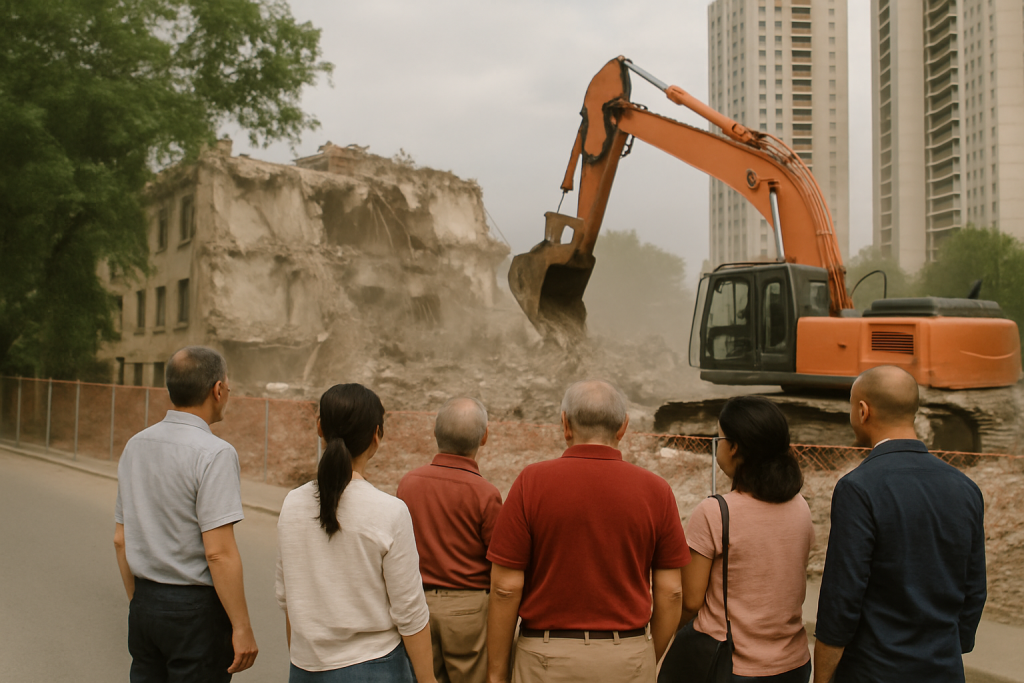
Vacating and Demolition – Members vacate their flats and move to temporary accommodation, with the developer providing rent or alternate housing. The old building is demolished.
Construction of New Building – The developer constructs the new building with modern amenities as per sanctioned plans.
Handover of Possession – After obtaining the Occupation Certificate (OC), the developer hands over the new flats along with agreed benefits.
Benefits of Redevelopment
Bigger and Better Flats – Members often receive additional carpet area.
Modern Facilities – Lifts, parking, fire safety, CCTV, and recreational spaces improve lifestyle.
Financial Support – Corpus fund, rent, and shifting charges provide financial stability during the process.
Increased Property Value – Redeveloped flats have higher market value compared to old ones.
Community Growth – Redevelopment often transforms societies into vibrant, well-planned communities.
